

Dermatoglyphics: Decoding Your Genetic Blueprint
Dermatoglyphics, or fingerprint analysis, is a scientific method used to identify an individual’s genetic potential. This analysis covers hemispheric dominance, learning styles, working styles, core personality traits, and love languages. By understanding your true potential, you increase your chances of success in life while gaining a deeper understanding of yourself and others.
The immense potential of fingerprints for identification was mentioned 15 centuries ago in the Holy Qur’an:
“Does man think that We will not assemble his bones? Yes. [We are] Able [even] to restore his very fingertips.” (Al-Qur’an, Al-Qiyamah (75): 3-4)
Through extensive research, it has become clear that every individual’s fingerprints are unique. No two people share the same set, making them the global standard for human identification. Today—with ongoing scientific advancements—fingerprints are also used to map an individual’s intelligence, talents, and learning styles based on their innate personality.
Technology Meets Human Potential
Fingerprint analysis is a cutting-edge, technology-based method for analyzing the abilities of both children and adults. By identifying these natural traits, we can develop opportunities for success more effectively and efficiently than ever before. It helps us pinpoint the right learning style, natural personality, and suitable career path.
Why is fingerprint analysis necessary? It provides a clearer vision for your life’s journey, allowing you to truly enjoy the profession you pursue.
Solving the Career and Parenting Dilemma
Many people struggle to choose the right major or career. Similarly, many parents unknowingly pressure their children into specific roles without understanding the child’s actual abilities or desires. This often leads to individuals working in fields unrelated to their education or feeling forced into a profession.
This confusion can be resolved through fingerprint analysis. Our tests reveal your innate intelligence, learning style, and personality, allowing you to focus on maximizing your true potential.
The Science of Dermatoglyphics
The term “Dermatoglyphics” comes from the Greek words Derma (skin) and Glyphe (carving). This field of study is based on the theory of epidermal ridges on the skin’s surface. Supported by robust research, it views fingerprints as a person’s “genetic blueprint.”
Experts are fascinated by fingerprints because:
Uniqueness: No two people have the same prints; they are impossible to forge.
Permanence: Fingerprint patterns do not change from birth until death.
Measurability: They are easy to classify, measure, and integrate into digital databases.
From Forensics to Personal Development
Research shows that fingerprint patterns develop in the fetus between 13 and 19 weeks of gestation. Today, scientists are intensively studying fingerprints in relation to intelligence, physical health, and psychology—with a sample size exceeding 3 million people.
Statistically, research concludes that fingerprints are closely linked to the brain and human personality. This led to the creation of the Fingerprint Biometric Analysis System, a technology designed to sample, analyze, and generate comprehensive reports on human potential.
While fingerprinting was originally designed for identification and forensic purposes, it has evolved over time into a powerful tool for personal and educational development.
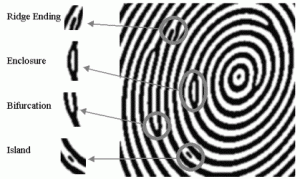
The science of fingerprints evolved significantly after Dr. Harold Cummins introduced the term DERMATOGLYPHICS. The word originates from the Greek Derma, meaning skin, and Glyphe, meaning carving. This field is based on the theory of ridges on the epidermis or the skin’s surface. Dermatoglyphics has a robust scientific foundation supported by extensive research, holding the belief that fingerprints are an individual’s “genetic blueprint.”
Scientists have discovered that the patterns on human fingerprints are scientifically linked to the genetic code of brain cells and human intelligence potential. Research began with Govard Bidloo in 1865, followed by J.C.A. Mayer (1788), John E. Purkinje (1823), and Noel Jaquin (1958). In 1967, Beryl Hutchinson authored “Your Life in Your Hands” regarding hand analysis. Finally, research by Beverly C. Jaegers concluded that fingerprints reflect an individual’s characteristics and psychological aspects.
An individual’s fingerprint pattern is unique and influenced by genetic formation processes. According to Al Gaan, a fingerprint practitioner, human fingerprints never change and are closely related to the development of the nervous system. The formation of fingerprints begins when the fetus is 13 weeks old, coinciding with the formation of brain cells. The process concludes by the 24th week. Human fingerprints are permanent and impossible to forge.
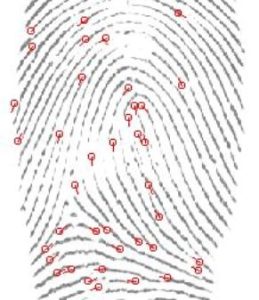
Currently, fingerprint analysis methods have been developed to reveal intelligence and personality. This method combines Dermatoglyphic Science, Neuroscience (brain), and Psychology (behavior). It was developed through studies of hundreds of thousands of fingerprint samples, which revealed that specific patterns express correlations with certain behaviors. Fingerprint analysis can also reveal abnormalities and even an individual’s health status.
Research Summaries on the Correlation Between Fingerprints and Intelligence
Independent research by psychometric and personality experts Prof. Dr. M. Zin Nordin, Dr. Mohd. Suhaimi Mohammad, and Dr. Wan Shahrazad Wan Sulaiman concluded that inventory testing shows GOOD and HIGH reliability with an alpha coefficient of 0.849. A significant correlation was found between test results and other testing tools (tundra game activity simulations) using chi-square statistical tests.
Research by Chinese scientist Liu Hongzhen (accessible at cnki.net).
According to Dr. Syailendra WS, SpKJ, fingerprint patterns are formed in the womb between 13–19 weeks. These patterns are hereditary and influenced by an individual’s DNA.
In 1986, Dr. Rita Levi-Montalcini and Dr. Stanley Cohen conducted research on the correlation between Nerve Growth Factor (NGF) and Epidermal Growth Factor (EGF). This research found a correlation between epidermal ridge patterns and the neural growth system, showing a link between fingerprint patterns and the brain. For this discovery, they were awarded the Nobel Prize.
Experts state that the central nervous system is connected to various parts of the brain. The brain is the center of all physical and mental activities. Each part—the prefrontal, frontal, occipital, parietal, and temporal areas—has different functions and varying strengths (dominance). Therefore, it is logical that an individual’s fingerprint patterns can manifest the workings of these brain regions.
However, fingerprint analysis is limited to identifying potential, talent, and basic personality, whereas environment and education also determine character. By knowing one’s talent, we can provide better direction to maximize goals. For example, someone with artistic talent will fare better if directed toward the arts rather than becoming a scientist, making the investment of time and cost more effective and efficient.
Zhai Guijun, in the paper “Report on Study of Multivariate Intelligence Measurement through Dermatoglyphic Identification” (published April 15, 2006), stated:
“I started to study the correlation of dermatoglyph (fingerprints) and human intelligence in 1988. Through 19 years of continuous efforts, I have established a preliminary systematic method for intelligence measurement through Dermatoglyphic identification… sampling over 40 thousand people in 25 regions of China.”
The study concluded that fingerprint analysis makes the physiological and physical measurement of human intelligence possible. It accurately identifies differences in intelligence and personality, making it a viable tool for schools or institutions in talent selection.
Russian scientists researching fingerprints in career selection (accessible at strf.ru).
Scientific publications on the link between fingerprints, the brain, and behavior (accessible at PubMed).
According to The Sunday Times, scientists from Barcelona University studied hundreds of students and concluded that fingerprints reflect intelligence. They found that intellectually disabled children had substantially different fingerprints (more arches and circular patterns) compared to their peers.
Thesis by Prof. Thomas Fogle (Saint Mary’s College, Indiana) titled “Using Dermatoglyphics From Down Syndrome And Class Populations To Study The Genetics Of A Complex Trait.”
Chronological History of Dermatoglyphics
1684: Dr. Nehemiah Grew presented an introduction to Dermatoglyphics to the Royal Society.
1685: Dr. Bidloo published Anatomia Humani Corporis, showing human figures and ridge details.
1686: Dr. Marcello Malpighi noted ridges, spirals, and loops in fingerprints.
1788: J.C. Mayer was the first to theorize that fingerprints were unique.
1823: Dr. Jan Purkinje classified fingertip patterns into nine types.
1832: Dr. Charles Bell published The Hand, combining neuro-anatomy with clinical practice.
1893: Dr. Francis Galton established the individuality and permanence of fingerprints (Arch, Loop, Whorl system).
1897: Harris Hawthorne Wilder invented the Main Line Index.
1926: Dr. Harold Cummins & Dr. Charles Midlo coined the term “Dermatoglyphics.”
1936: Cummins and Midlo established that patterns are fully formed by the 4th fetal month.
1944: Dr. Julius Spier published The Hands of Children, linking hand patterns to psychological development.
1968: Sarah Holt published The Genetics of Dermal Ridges, summarizing research on normal and afflicted populations.
1970: The USSR used Dermatoglyphics for selecting Olympic contestants.
1976: Schaumann and Alter published Dermatoglyphics in Medical Disorders, identifying indicators for congenital diseases.
1985: Dr. Chen Yi Mou (Harvard University) applied Dermatoglyphics to education based on Howard Gardner’s Multiple Intelligence theory.
2004: The IBMBS reported over 7,000 published theses. Today, the U.S., Japan, China, and Taiwan apply Dermatoglyphics to educational fields to improve learning efficiency.